Reconstruction in the Hema shop windows
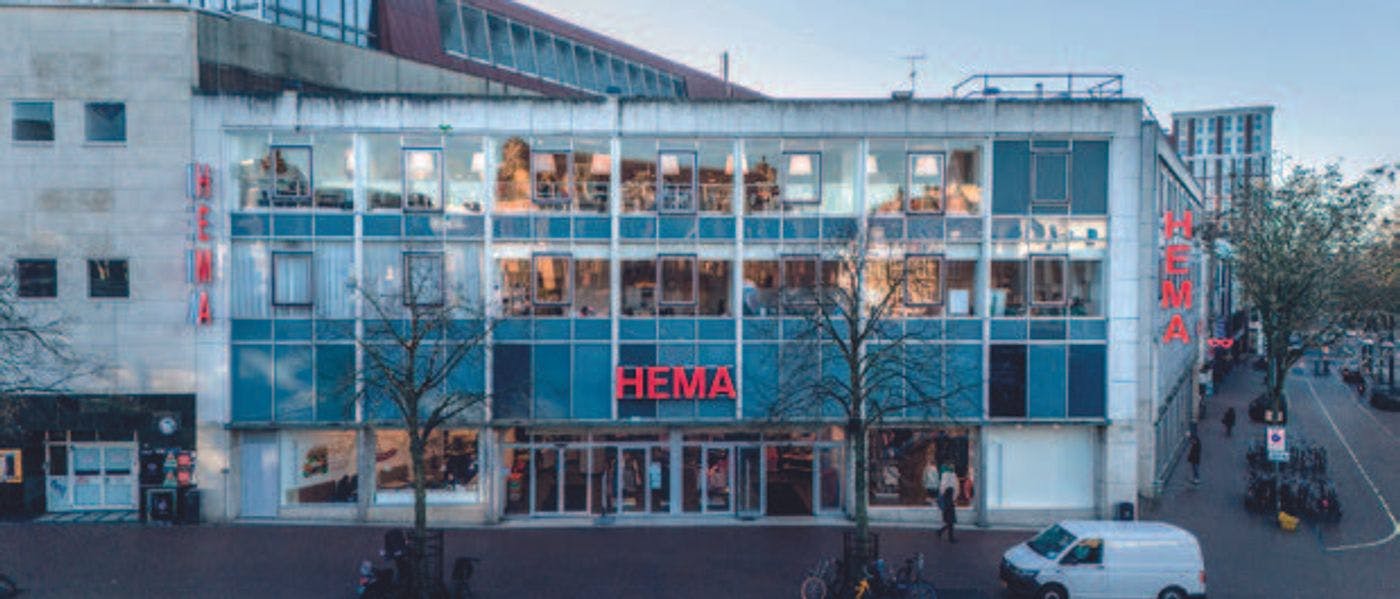
The city center of Nijmegen was almost completely destroyed by the bombing of February 22, 1944. And even further by the battle for the Waal Bridge during Operation Market Garden in September of the same year. After the rubble had been cleared away, the city center had to be rebuilt. Between 1945 and 1965, a completely new city was created here.
The history of this reconstruction will be displayed in six Hema shop windows starting on May 3. It is the fourth exhibition in a series of five organized by the Nijmegen Reconstruction City Foundation. The first window shows the city after the war, before reconstruction. The rubble of the destruction has been cleared away. The city is ready to be restored. There are also images of the celebrations surrounding the liberation.
Soon after the bombing, there was a discussion about the future of Nijmegen's city center. An important starting point was the so-called city formation: the city center would be filled with shops. Small businesses, workshops, and 'ordinary' houses were given a new location on the edge of the center or outside it.
De ‘city’ moest goed toegankelijk zijn voor het vervoermiddel van
de toekomst: de auto. Er kwamen ruime straten, zoals de Augustijnenstraat en de Burchtstraat. Een groot plein, Plein 1944, moest dienst doen als evenemententerrein, als parkeerterrein en als overstapstation voor het openbaar vervoer.
In twee etalages worden beelden getoond van de wederopbouw van de stad in de periode 1945- 1965 en de specifieke kenmerken van de wederopbouwarchitectuur. Het duurde door gebrek aan geld en bouwmaterialen, en wet- en regelgeving tot 1950 voordat de wederopbouw goed op gang kwam. Maar daarna werd er dan ook binnen vijftien jaar een gloednieuw centrum gebouwd, onder de bezielende leiding van burgemeester Charles Hustinx. Zo kreeg Nijmegen een typisch wederopbouwcentrum, een voor Nederland unieke binnenstad met alle kenmerken van de weder
opbouw. Die worden in de etalages uitgebreid toegelicht.
The Stadsschouwburg theater and H&M (formerly Peek & Cloppenburg) are iconic post-war reconstruction buildings, but there are many more. One of the shop windows offers a nice overview of typical post-war reconstruction buildings. Between 1945 and 1965, the city center was also embellished with a variety of works of art, sculptures, tile panels, and plastic art. These are also given attention.
A QR code has also been added, which can be used to take a tour of the reconstruction artworks in the city center and just outside it. The exhibition "Nijmegen and the Reconstruction" runs until October.
Voor meer informatie: www.wederopbouwstad.nl